regenerative architecture
From stone foundations to adobe: practising regenerative architecture at Kabakoo
Kabakoo learners put regenerative construction into practice through stone-foundation workshops and an adobe wall, alongside multidisciplinary designs for learning spaces using local materials.
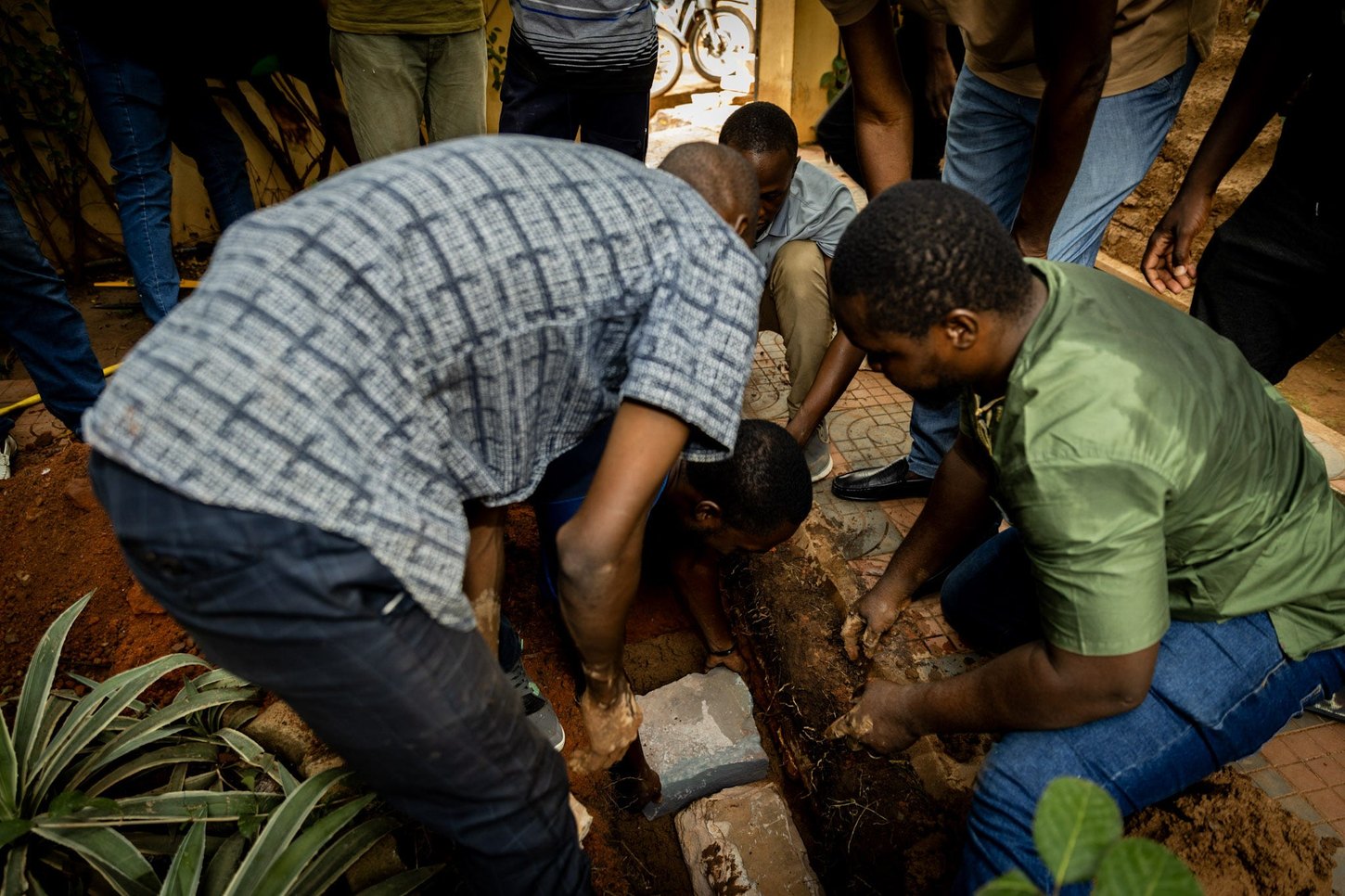
October 2023: taking regenerative architecture into practice
In October 2023, learners in Kabakoo’s Regenerative Architecture and Extended Reality training tried stone-foundation construction, made around fifty adobe bricks and used the dried bricks to build a wall. These practical workshops gave learners an opportunity to test theoretical solutions for regenerative construction through work with local materials.
The course, part of the Innovation Lab: Regenerative Futures in the Sahel, is designed to stimulate reflection on architecture and the city in the Sahelian context. Its practical workshops occupy a central place in the programme, connecting theoretical solutions with the continuing evolution of endogenous knowledge and craftsmanship innovation.
Developing and discussing learning-space designs
After attending an average of 3 sessions in each of the 5 modules already launched, learners developed skills in discussing Sahelian cultural and built heritage, preservation challenges, agriculture in architectural thinking and nature’s place in the city. Their discussions also covered the use and industrialization of local materials and their social status.
Multidisciplinary groups brought together architects, building engineers, ecologists, heritage students and masons. Each group designed an architectural prototype for a learning space using a specific regenerative construction system and local materials. The groups then presented their projects to one another, discussing the strengths, weaknesses, opportunities and risks of their proposals.
Trying stone foundations and making adobe bricks
During two hands-on workshops, learners encountered stone foundations as an alternative to concrete foundations. Mamadou Koné used videotapes and a face-to-face session to explain the technique before learners tried it themselves.
After preparing the stone foundations, learners learned the adobe brick-making technique during a second workshop. They produced around fifty bricks; once these had dried, they used them to build an adobe brick wall. The practical sequence moved from preparing foundations to making a building material and using it in construction.
Connecting architectural thinking with urban agriculture
The October programme also included a masterclass with Oumar Diabaté at Kabakoo’s co-learning space in Bamako. A veterinary doctor, founder of the Centre sahélien de formation et de recherche en agroécologie (CSFRA), and manager of an agro-ecological farm in Bamako’s suburbs, Diabaté presented the fundamentals of agroecology and urban agriculture.
He discussed their potential in the Sahel in relation to food sovereignty, local consumption, urban and peri-urban nature, and local biodiversity. The session enabled learners to understand the advantages of integrating agriculture into regenerative architecture and urban planning, alongside operational and technical means of doing so. Further events with Diabaté were planned, including practical regenerative urban agriculture workshops integrated into the training objectives and final module.
Explore the initiative further in Kabakoo’s progress report on the Innovation Lab: Regenerative Futures in the Sahel.