local materials
How Kabakoo learners put Sahelian architectural knowledge into practice with earth
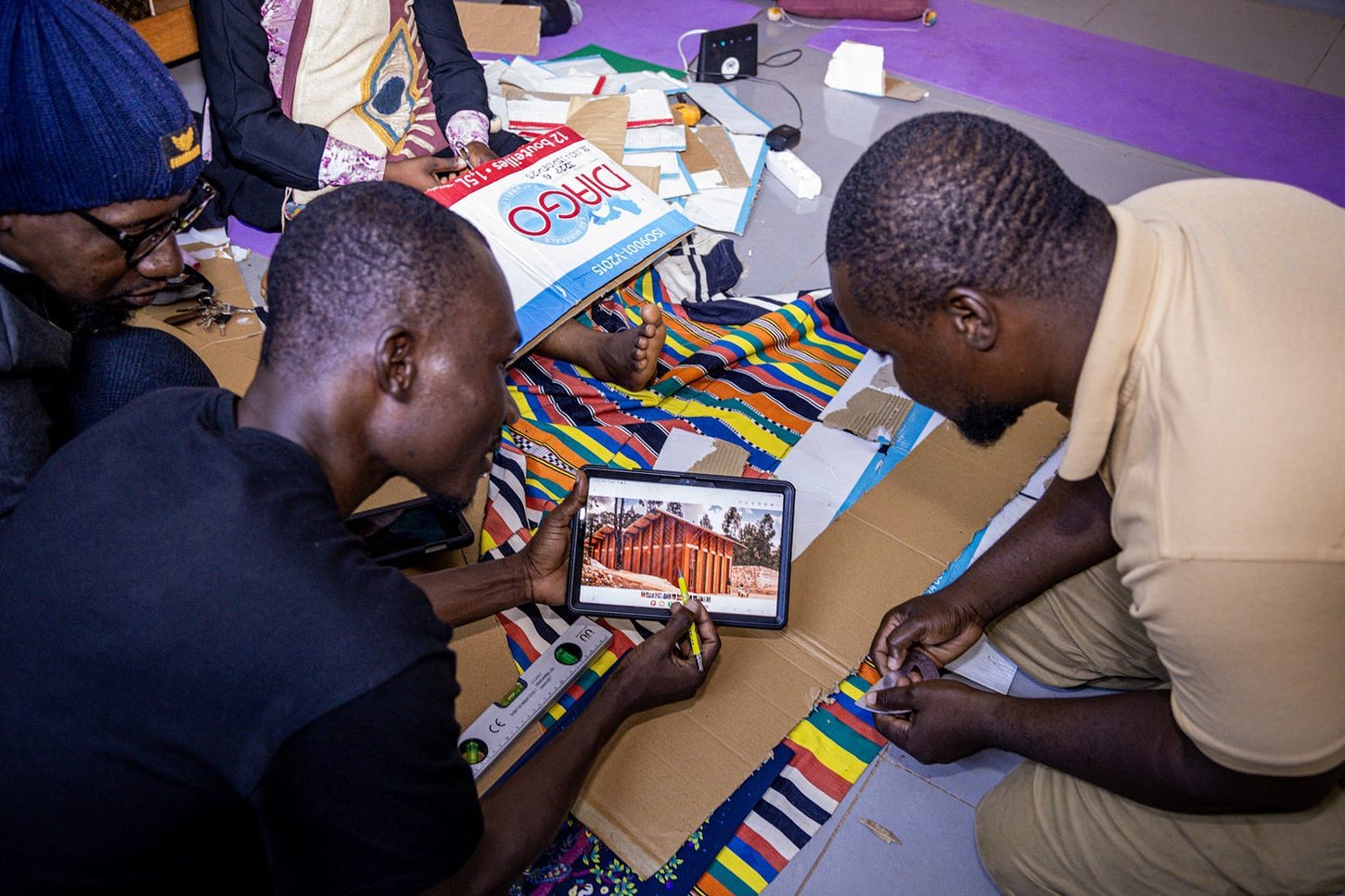
Kabakoo learners studied local materials and Sahelian architectural cultures, then worked with earth to explore its characteristics and techniques for shaping walls and other architectural components.
Begin with Sahelian building cultures
Study local architectural practices, then explore how to shape the material. In September, Kabakoo learners watched video capsules on the Kabakoo App featuring local materials and Sahelian architectural cultures, then worked with earth to understand its characteristics and techniques for forming walls and other architectural components.
The local materials and architectural cultures workshop was mentored by Mamadou Koné, an architect specializing in local materials. His experience includes restoring built heritage in the Dogon country, Timbuktu, and Djénné.
Work with earth and question familiar material choices
Use hands-on exploration to study the material itself: its characteristics and the techniques for shaping it into architectural components. These were the subjects of learners’ work with earth in the local materials workshop.
Kabakoo’s local materials module seeks to challenge an architectural imagination constrained by conventional and dominant materials and building techniques since colonization. In a related discussion, Emaelaf Tebikew Yalew’s thesis addressed the disconnection of architecture in Africa from local realities and endogenous architectural knowledge and culture since colonization. It also identified concrete’s dominance at the expense of other local materials better adapted to the climate.
Learners shared insights with Emaelaf on the economic and circular potential of processing and promoting local materials, discussing a return to local knowledge and the creation of circular and local economic value.
Explore the systems alongside the material
Consider constructive and structural systems as well as material characteristics. In a separate regenerative architecture workshop, learners began thinking about and testing systems for architecture using locally available materials.
This September exploration drew on both endogenous architectural knowledge and contemporary architectural technologies. Alongside the earth workshop’s focus on understanding and shaping a material, learners were beginning to explore the systems needed to design regenerative architecture.
Plan architectural elements as the next tests
Move from material exploration towards testing architectural elements. The September architecture update set out subsequent sessions in which learners would build walls, roofs, openings, foundations, and other architectural elements to test and familiarize themselves with local materials.
Those planned sessions would also introduce a wider range of local materials, extending the exploration beyond earth.